Looking for a law enforcement career with virtually endless opportunities to grow and specialize? Look no further than Charlotte-Mecklenburg Police Department.
As a new or lateral police recruit with CMPD, you’re not only choosing a path with purpose. You’re also positioning yourself to thrive in a progressive police department and a dynamic, fast-growing city.
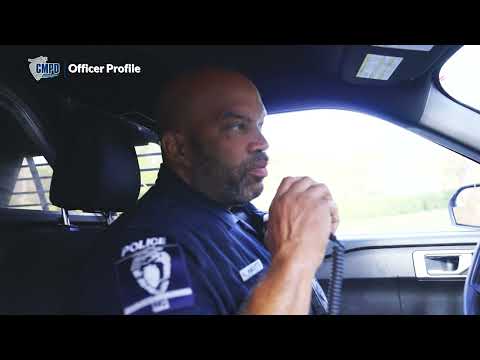
Sgt. Henry McSwain has been both a detective and a leader in CMPD’s Homicide Unit. It’s one of the department’s 30 specialized teams where officers with at least two years of critical patrol experience can advance, stay energized and take on new challenges from early in their careers through retirement.
Here’s what Sgt. McSwain has to say about why he chose CMPD, how to handle the hard days and how to succeed as a homicide detective in one of the nation’s largest police departments:
What inspired you to become a homicide detective?
Death is the most real and raw truth in civilized and uncivilized society. To take another’s life is to deprive them of everything they have. No one should have that power, and when they cross that line, there is no turning back. Someone who has murdered once now has it in them to do it again and again if given the opportunity. A homicide detective’s job is to find those individuals, stop them from continuing their bad decisions and attempt to hold them accountable.
Unfortunately, I have seen desensitization regarding death. Society is allowing murder and death to become normal. Trust me when I say it is not normal. There is no dignity in death. It is nasty stuff.
Do you have a typical day or week?
There is no typical day or week as a homicide detective. We generally know when we might be called to work or when to show up to work, but we have no idea when we will get home. When we are called in for a new case, we make plans and prepare our houses and families for us to be gone for long periods. We could be done at the end of the shift, or it could be days later. Many detectives have learned to sleep well under their desks or in their cars because the short nap between new leads may be all they get for many hours.
What does a day on the job look like when there isn’t a new case?
We work on current open cases. These are cases that could break at any moment when new information is found or comes in.
We work the phones, stay in touch with victims’ families and contact witnesses. We create different search warrants and court orders to gain information from phone records, social media, medical records, etc. We evaluate evidence and submit lab requests.
We prepare cases for trial, talk to the district attorney’s office, and do follow-ups the DAs request to make cases stronger. We document our cases by typing up our work and putting it into the case file. We gather statements and database materials for case files to create snapshots in time.
What drew you to work for CMPD, specifically?
I was drawn by the workload. I grew up in a small town where everyone knows everyone. I knew early on I didn’t want to stay because I would run into people I knew. I came to Charlotte because I thought it was big enough for that not to happen. But the world is a small place. Sometimes I still run into people I knew from home.
When I got here, I found there was plenty of backup and help if I needed it. There was no shortage of work, and CMPD was large enough to figure out a specialty I loved, and a path for me to work to achieve it. I loved solving crimes, so naturally I gravitated toward becoming a detective. I am 25 years into my career, and I have been a detective or detective sergeant for 14 years.
What do you wish more people knew about your expertise?
I wish more people knew just how truly devastating a homicide is for a family, for a detective and for a community.
How do you handle the emotional aspects of being a homicide detective?
You must, without exception, find moments to clear your head and not think about the devastation, emotions, sights, sounds and smells. What those moments look like varies from detective to detective. Some rely on family, some fish, some hunt. Others read, run, work a garden or work out. Still others play golf, take trips, play video games, collect trading cards, cook or play soccer.
Whatever the moment to decompress or get away looks like, it must happen for a detective’s well-being.
What do you wish people better understood about the process of solving homicides?
It takes a community.
Solving homicide cases comes down to gathering as much information and evidence as we can, as fast as we can. We have to do this before witnesses and the community move on, before evidence is lost and before the next case comes that requires our resources.
What advice do you have for someone interested in becoming a homicide detective with CMPD?
Learn as much as you can as a patrol officer. Expose yourself to as many investigations as you can. Learn the various systems and databases available to everyone, and what those systems and databases can do for you.
Learn how to solve misdemeanor crimes like hit-and-runs, damage to property and assaults. This is very different from simply taking reports. It’s solving these crimes by talking to witnesses, using our systems and databases, identifying suspects, and then talking to those suspects legally to gain confessions or information that can be used to arrest them and hold them accountable in court.
I strongly suggest new patrol officers find the one thing in their job they love doing the most and visit that love often to reinvigorate themselves. The only way to do this is to expose yourself to as much as you can. Day in and day out, you will do something you don’t like as a patrol officer. It will wear you down if you don’t revisit your love and/or passion. Maybe you come to love finding drugs and/or guns, maybe it’s traffic stops, maybe it’s figuring out who committed the crime, maybe it’s talking to people, helping people with problems, or responding to “priority ones” and working those scenes identifying evidence and witnesses.
If you want to be a successful detective, you need to build your foundations early with constant learning, taking solid reports full of actionable leads and well-written witness and officer statements, and learn how to solve crimes. If you put in the hard work up-front, you’ll be able to recognize what good work looks like later and how to see the actionable leads buried in a case.
Accelerate your career here
Ready to join the men and women of CMPD? Start your new trainee, lateral entry or intermediate entry application today.