
If you’ve ever been an athlete, you already have a head start on some of the mental and physical traits you’ll hone as a recruit at the Charlotte-Mecklenburg Police Department’s Training Academy. Attributes like discipline, teamwork and grit don’t just play well on the field – they’re also essential to your success in law enforcement.
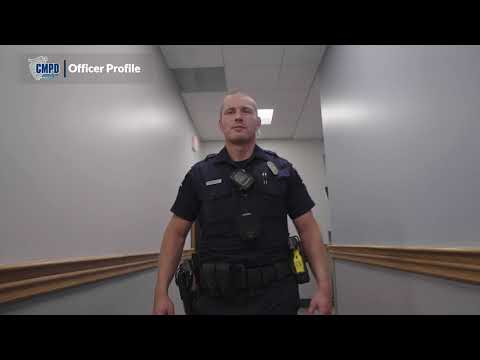
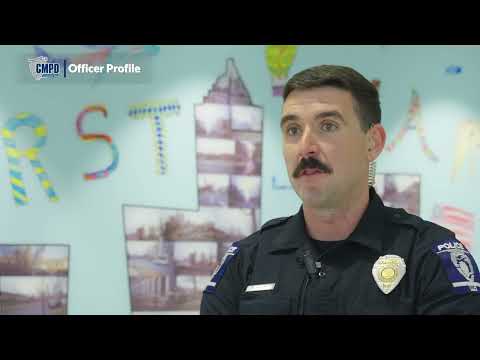
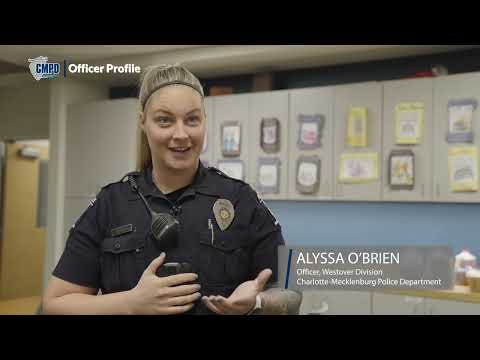
Sgt. Melissa Cicio, Officer Emily Acker-Estes and Officer Chrissy Pickert were all collegiate athletes. Sgt. Cicio was an All-American soccer player. Officer Acker-Estes, a member of CMPD’s K9 unit, played tennis. Officer Pickert played softball and now serves as lead driving instructor.
Here’s what they had to say about the parallels between sports and policing:
What drew you to policing after your athletic career?
Sgt. Cicio: Policing mirrors the sports team atmosphere I grew up with. I love working as part of a team where individuals use their strengths to make the entire unit better. I was also drawn to policing because it is active and ever-changing, just like a sport. Every call for service is different, just like every opponent. I knew I wanted a career that was challenging as well as fast-paced, so policing fit very well into that picture for me.
Officer Pickert: My dad was a police officer for Belmont Police Department. I knew I wanted a career in law enforcement because it was such a major part of my life growing up.
Officer Acker-Estes: My school did not have a criminal justice major, but I was able to take several criminal justice classes. My original plan was the FBI, but I knew several CMPD officers from working for many years at a restaurant in South Division. They steered me toward CMPD. At the time, it was going to be a stepping stone to go federal, but that quickly changed.
What challenges did you face when transitioning from being a student-athlete to becoming a police officer?
Officer Acker-Estes: Going from a structured student-athlete schedule to a structured Academy schedule was not that hard. Now, learning how to iron a uniform, shine boots and somehow get pet hair off the uniform was not as seamless.
Sgt. Cicio: This career isn’t a game and losing isn’t an option.
Did you always see yourself working in law enforcement?
Officer Acker-Estes: Law enforcement always interested me, but I didn’t really consider it an option until college.
Sgt. Cicio: I did not. I contemplated going into the military after college, in the officer candidate program, but I wanted to impact communities. As I came to know some officers from other agencies, they suggested a career in law enforcement, CMPD specifically.
What skills from your time as an athlete have helped you as a police officer?
Officer Pickert: As a college athlete, I developed a range of skills that have been beneficial as an officer, including discipline, time management, teamwork, mental toughness and communication. All of these allow me to focus on attention to detail and respond to stressful and emotionally challenging calls for service with composure and good decision-making skills.
Officer Acker-Estes: Being able to juggle a loaded schedule of sports and academics transitioned well into the Academy. Being physically fit after college athletics helped as well.
How did your training as an athlete prepare you for the physical demands of policing?
Officer Acker-Estes: The responsibility and accountability that come with being a student-athlete play out in both the physical and mental demands of this job. You’ve got to be able to hold yourself to higher standards if you want to succeed in policing.
Officer Pickert: Playing a college sport instilled a strong foundation of physical fitness and endurance. These are crucial in law enforcement. It allows officers to respond effectively in physical situations and to handle the demanding nature of police work.
Sgt. Cicio: Training for sports taught me what my body could do when my brain was telling me differently, to persevere through tough things like workouts or injuries. It reminded me that I’m not the only one working to be better, and that the training time is as important as the game time. It’s the same for policing. Training and working skill sets from knowledge to tactics is very important so when “game time,” or that call for service, happens, you are ready physically and mentally.
In sports, teamwork is key. How has that helped you at CMPD?
Officer Pickert: Teamwork and communication are essential for success in college athletics. In police work, we rely on our fellow officers and work as a team in high-pressure situations where teamwork and clear communication are vital.
Athletes are taught to perform under pressure. How does that translate to high-pressure situations in policing?
Officer Acker-Estes: It comes with training and experience. Just like you have to learn how to keep it together on a tennis court when everything is falling apart, you have to be able to work through the stress and still do your job.
Officer Pickert: Staying focused in the moment and limiting distractions is something that is used every day in policing. Remaining calm and focused on the call for service, no matter how chaotic the situation, is crucial for managing the scene and making split-second decisions.
Do you feel like being an athlete gave you an advantage in handling the physical fitness requirements of the Training Academy?
Sgt. Cicio: Nothing was harder for me mentally and physically than three-a-day practice sessions in college. When I was exhausted, the next practice was still around the corner. The same happened in the Academy. When I was exhausted, the next test, PT or practical skills learning block was starting and I couldn’t quit. You have to keep learning and moving forward. Being a college athlete prepared me for that.
Officer Pickert: Absolutely! As a college athlete, I was already accustomed to regular training, pushing myself physically and maintaining a certain level of fitness. This foundation made it easier for me to meet the physical fitness standards required in the Academy.
What leadership lessons from athletics have you applied as an officer?
Officer Pickert: Sports teams have leaders, whether it’s a team captain or an informal leader. In these roles, you learn how to motivate others, take responsibility and lead by example. These leadership skills have been essential in my role as a police officer. Police officers are often looked to for guidance and support by other officers and the community.
Sgt. Cicio: I was a captain my junior and senior years of college. I was the only underclassman nominated as a collegiate captain my junior year. It taught me humility, responsibility and that, when people put their trust in you to lead them, you can’t let them down.
Officer Acker-Estes: The way you carry yourself and act around other people matters. There’s always someone paying attention, and he or she will take inspiration from your hard work.
In sports, setting and achieving goals is crucial. How do you set goals now?
Sgt. Cicio: I try to set goals with realistic timelines, but also that are challenging to stretch me as an officer. I try to surround myself with individuals in the department that challenge me and hold me accountable to continue on the professional development track. I do this to keep from getting stagnant in my position and push myself into a new area for learning.
What do you find most rewarding about being a police officer?
Officer Acker-Estes: I love being a canine handler and being able to apply that to helping officers and civilians alike.
Sgt. Cicio: I love to solve problems and help people. The satisfaction I felt as an athlete and part of a team were similar because I was in a leadership role where people counted on me to organize things and have a plan for the betterment of the team as a whole. I was always proud of my accomplishments as an athlete, but I am more proud when I am able to provide solutions and support for our community members.
What would you say to other women who are considering a career in law enforcement?
Officer Pickert: Physical and mental toughness are skills that can be developed. Physically, you don’t have to be in peak physical condition when you start. The key in the Academy is to stay consistent, push yourself and don’t quit. You will get stronger with time. Be confident in your skills and your abilities will grow with each challenge you face and overcome. Mental toughness is built through experience. The more challenges you have faced in your life and the challenges you will face in the future, the stronger your mental toughness will become. Don’t doubt your abilities!
Officer Acker-Estes: You have to be able to push yourself both physically and mentally. You can draw from the support and encouragement of those around you, but at the end of the day, you’re the only one who can make the decision that you can do this.
Sgt. Cicio: Just do it! There is more in you than you even know, and you can achieve this goal if it is what you want. If you are a collegiate athlete, you are already physically ready or able to get ready again, even if you’ve been away from athletics for a while like I was. I ended my collegiate career at 22, and didn’t come to policing until I was 30. You are also mentally ready if you’ve been a trained athlete before. You’re already ahead of the game!
Accelerate Your Career Here
Ready to join the women and men of CMPD? Start your new trainee, lateral entry or intermediate entry application or browse open civilian positions.