So you’re thinking about a career in law enforcement, and you’re doing your homework on what it’s like to be a recruit with Charlotte-Mecklenburg Police Department. We’ve got you.
Read on to find out why we added an extra recruit class in 2024, who you’ll learn from, why the time you’ll spend at the Training Academy just got longer, what to expect from our training curriculum and more.
1. Why we added a fourth recruit class to the schedule in 2024
We’ve seen an increased demand in recruits looking to begin or continue a career in law enforcement with CMPD. These men and women come from all backgrounds and stages of life, and are called to the profession for a variety of reasons.
To accommodate these aspiring officers, we added a fourth training to our schedule. The deadline to apply for Recruit Class 200 is Sept. 10, 2024. Recruits report Dec. 16, and those who successfully complete the program will earn their badges and become sworn CMPD officers in summer 2025.
2. Why the duration of CMPD’s Training Academy changed from six to eight months
The North Carolina Justice Academy, along with the Criminal Justice Training and Standards Commission, spent several years redesigning the Basic Law Enforcement Training (BLET) Curriculum. The redesign increased the number of required hours from 640 to 868.
Beginning with Recruit Class 197 this past February, CMPD adopted the pilot version of this new curriculum. This lengthened the amount of time recruits spend. Read on to see how this extension benefits all recruits.
3. What’s different in this new, longer police training format
This is the first overhaul of the BLET curriculum since 2000. The additional hours are mainly practical scenarios, which provide more hands-on training for recruits. Scenario-based training has been proven to be one of the most beneficial means to train, and it allows you to better retain and apply what you learn in the classroom.
Standardized Field Sobriety Testing (SFST) has also been added as a block of instruction under the new curriculum. SFST provides new officers a baseline understanding for identifying drivers suspected of driving under the influence (DWI).
4. What’s included in the overall training structure and curriculum blocks
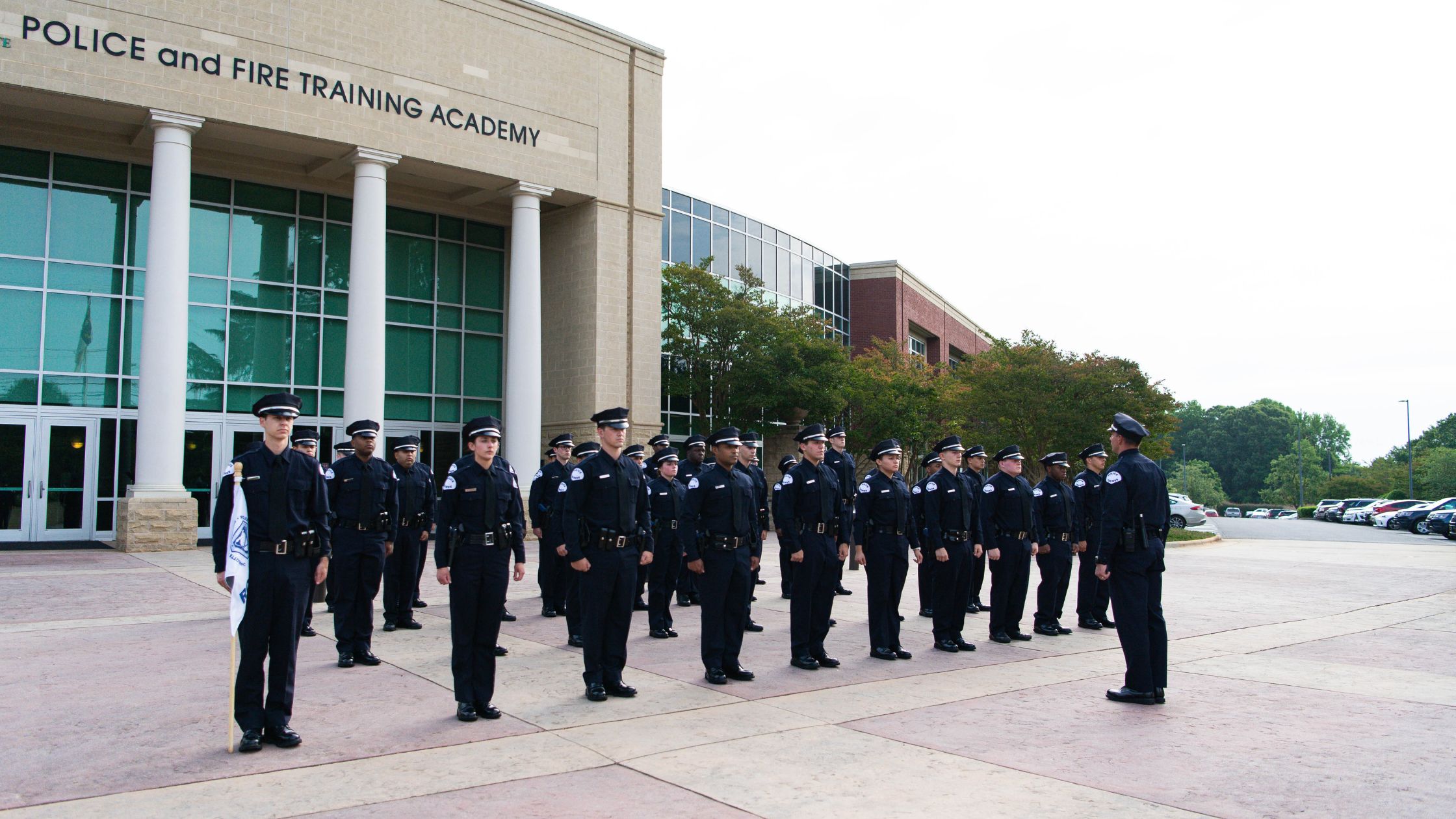
There are 39 blocks of instruction in the CMPD Training Academy. All blocks have a set number of classroom hours. Most also have practical scenario training. This is where you can practice what you learn in the classroom.
Each block has an exam at the end of instruction. In addition to the academic aspect of the Academy, you can expect to participate in physical training multiple times a week. These sessions are approximately an hour long, and no session is the same. They include a variety of movements that prepare you for the end-of-course physical test and ensure you’ll be in top shape at graduation.
In addition, you’ll spend hours on the firing range to become proficient in the operation of your firearm.
Finally, you’ll spend significant time on the driving pad learning how to operate your police vehicle in the safest, most efficient manner.
5. What sets CMPD’s Training Academy apart from others
Our instructors are all sworn CMPD officers. This means each of them has a vested interest in the successful training of each recruit. There is always a chance an instructor will be answering calls for service with you a few months after you spend time together in the classroom.
Each instructor is passionate about his or her block of instruction, and personally prepares the lesson plan and scenarios. Instructors aren’t forced into the classroom to teach a topic that they don’t care about or don’t have any interest in.
6. Who makes up your Academy training team
CMPD has five recruit trainers permanently assigned to the Training Academy. The department also has four in-service trainers who assist with recruit training each day. The firearms training unit has four officers. Other than these 13 officers, all instructors are assigned elsewhere in the organization and take time away from their normal assignment to spend time instructing recruits. All instructors have a vested interest in their topics, and most have years of experience in their particular areas of instruction.
7. How remaining active in the field helps trainers better teach and support recruits
Those who are still in the field are doing the hands-on police work each day. They see firsthand where improvements need to be made. They can also apply what is being taught to personal experiences they have had answering a call for service or investigating a particular crime.
8. Why you won’t board at CMPD’s Training Academy, and why that’s a good thing
By not boarding at the Academy, you have the opportunity to return to your home each night for a quiet, familiar place to study and rest. This approach also helps prepare you for the demands of balancing work and family responsibilities as a sworn officer.
9. How to compare law enforcement training programs to find the right fit
If you’re considering multiple law enforcement training programs, take time to do your research, ask questions and get to know your recruiters.
We may be partial, but we believe CMPD offers the best training program, the best opportunities for advancement and the best options for working in specialized units and different assignments in the span of your career. Start your journey to the badge with CMPD today.
Accelerate your career here
Ready to join the men and women of CMPD? Start your new trainee, lateral entry or intermediate entry application today.