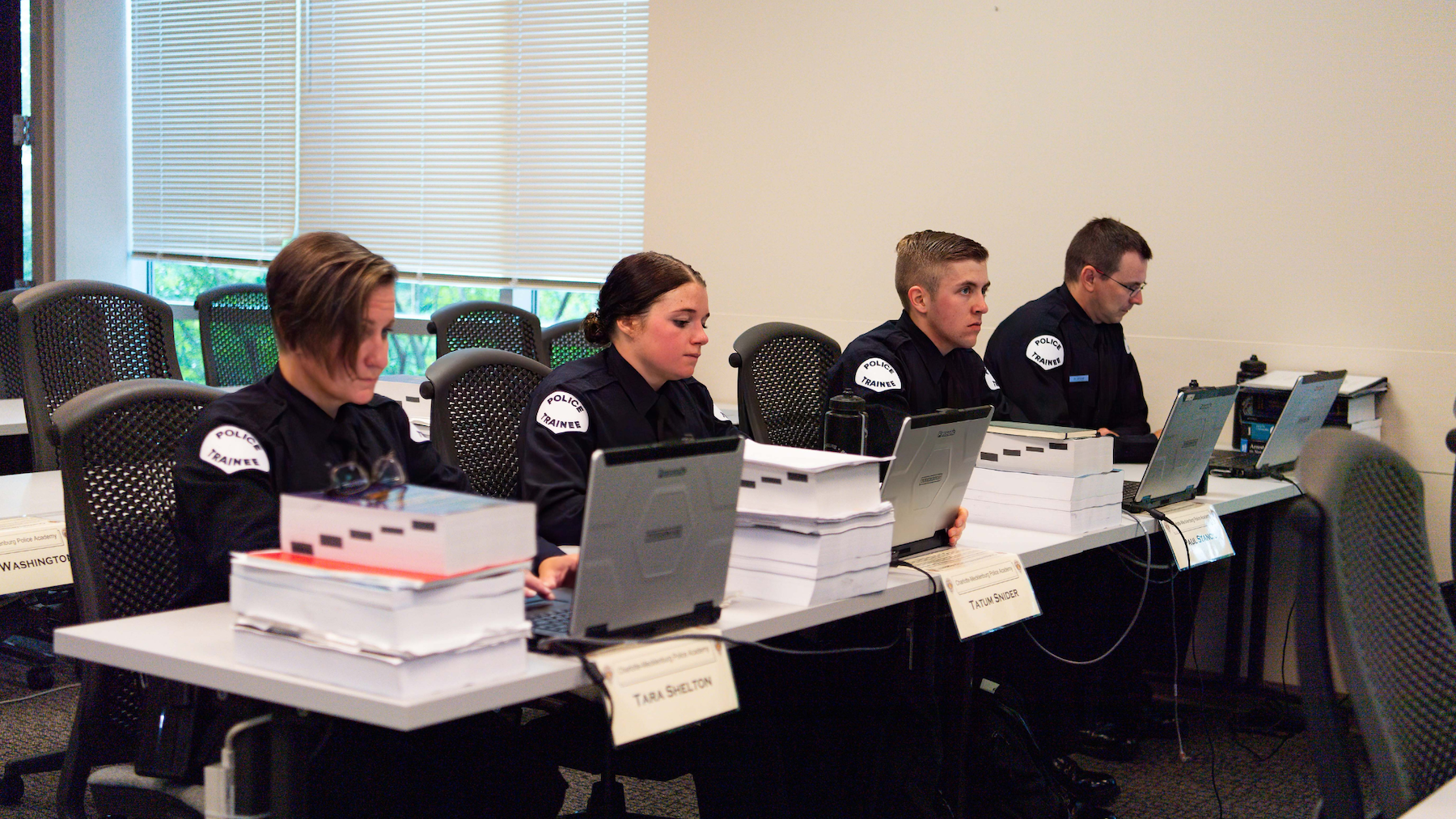
Here’s something you might be surprised to learn about Charlotte-Mecklenburg Police Department’s Training Academy: Often it isn’t the physical demands that hold recruits back. Instead, it’s in the intense academic and testing schedule where recruits frequently fall behind.
To succeed in the academic side of the CMPD Training Academy, you need to sharpen two skills. First, you must be able to efficiently absorb and process large amounts of information. And second, you need to think critically about what you learn in lectures and self-guided study.
Anna Duffey is the law enforcement training supervisor at the Training Academy. We recently sat down with her to ask how recruits can take advantage of her team’s expertise. We also asked her to share her best advice for how to prepare to succeed in the academic side of training.
Tell us about your role as law enforcement training supervisor.
“I lead the team that develops eLearning for the department. Our group also provides academic support for recruits, submits state paperwork, maintains training records and more.
“A large part of my role is to support recruits academically. Our division training specialist provides most of the day-to-day support for recruits. This person leads study skills sessions and meets 1:1 with recruits who need extra support. We also work together to identify recruits who might struggle academically even before they step through our doors for their first day of training.”
What are recruits’ biggest misconceptions about their level of preparedness for training?
“New recruits should know that, while it’s easy to get caught up in being physically prepared for the Training Academy, it’s equally important to prepare academically. You have to truly learn the material – not just memorize it. What you learn in the Training Academy classroom is the foundation for your entire career as a CMPD officer.”
How can recruits prepare themselves to ace the academic side of the Training Academy?
“Make sure your brain is turned on and ready to learn.”
Here are three ways Anna suggests you can practice:
Read
“Whether it’s a magazine, a novel or something in-between, read. Daily. Practicing reading will improve your reading speed. This will prepare you to get through information and prepare yourself for class more efficiently. Also, think about what you’re reading. Pause every now and then and write a summary or say one out loud.”
Listen
“Listen to TED Talks, interesting podcasts or anything that presents content you have to hear (rather than read) to grasp. Pause periodically and talk through the key points out loud. Ask questions about what you hear. This prepares you to listen well and think critically during instruction.”
Plan
“Make a tentative plan for what your study schedule might look like. If you know you struggled with studying the last time you were in school, research alternative ways to study or come in prepared to talk to the academic support team about needing help. Be prepared to hit the ground running. Don’t wait until you’re having issues to seek support.”
Who’s typically better prepared for Academy academics – recent college grads or recruits transitioning from the military or traditional workforce?
“Being a recent college graduate can give recruits a boost in terms of study habits. However, academic success as a recruit will likely require study habits and strategies different from what has worked in past structured learning environments.
“On the flip side, many recruits come to us from the military and the workforce, some a long way out from a classroom. They tend to do very well academically at the Training Academy because they’ve been thinking critically on a daily basis for many years.”
Accelerate your career here
Ready to join the men and women of CMPD? Start your new trainee, lateral entry or intermediate entry application today.